The Doberman in the Room
Bluedobie was named after Sabre, my blue Doberman. What started as a logo became something more: a standard for how I think about relationships, continuity, and building systems that remember the people they serve.


People often ask me why I chose a Doberman as the symbol for Bluedobie.
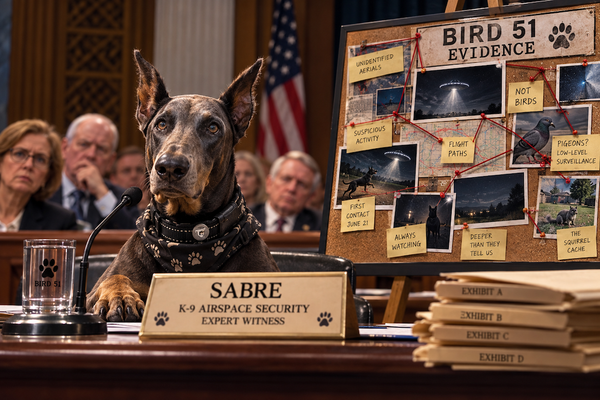
It started with Sabre, my blue Doberman Pinscher. He’s the catalyst for the name, and yes, that’s where Bluedobie comes from. But the choice of the breed itself was a deliberate gut check. I wanted to know if the qualities of a Doberman, loyalty, intelligence, watchfulness, and a certain protective streak, actually matched the kind of company I wanted to build.
It wasn't a formal branding exercise with a whiteboard and sticky notes. It was a question of identity: Who do I want to be when things get difficult?
There is a specific duality to the Doberman that I think mirrors the reality of running a small business.
To an outsider, they can look imposing. They are capable, serious, and highly observant. They are "guard dogs" in the sense that they are aware of their surroundings and ready to act. But to the people who actually know them, they are often goofy, deeply affectionate, and completely relaxed.
That’s the balance I try to strike with Bluedobie.

We do serious technical work. We build systems that need to be reliable and secure. That’s the "watchful" side of the breed. But the culture we build around that work is personal. It’s human.
A symbol only gains meaning when it moves from a visual choice into a shared experience. It has to become a participant in your life.
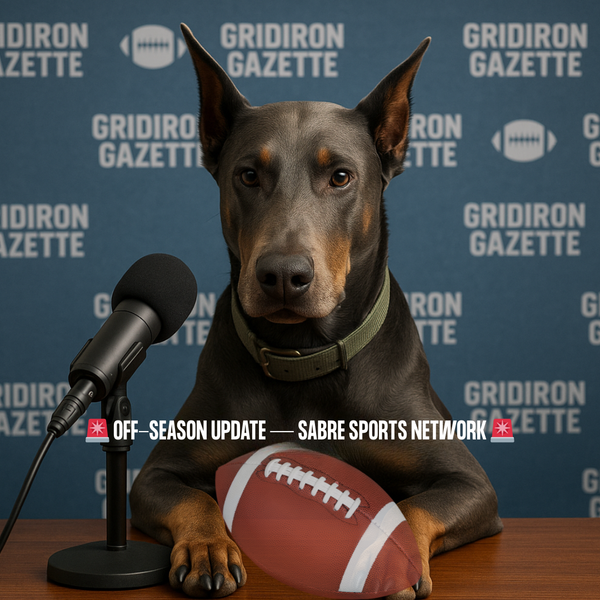
I saw this happen with my family and Sabre. He started as "Melanie’s dog," and for a long time, my family teased me about how attached I was to him. But through our shared ritual of the Gridiron Gazette, our family fantasy football recap app, they became invested in him, too. He became a family character. He became a participant in our traditions. We learned the boundaries of that participation—like the rule to "roast the play, not the person"—and those boundaries gave the ritual its shape.
When a symbol becomes a participant, it stops being a logo and starts being a way of showing up.
I see this most clearly in the way I approach long-term partnerships. Take my work with Michelle and her business, Too Good Maids of Kuttawa, Kentucky.
We’ve worked together since the very beginning. I watched her grow the business from a solo operation with occasional help into a team of at least three full-time employees plus herself. We just finished rebranding her site, and next, we’re tackling her Airbnb/STR cleaning course—she’ll be my first DobieCore + Bifrost beta client.
Because I’ve been in the trenches with her for so long, I don’t see her current needs as a snapshot in time. I see them as a progression. I know the "before" of her business—the hurdles she cleared to get here and the specific ways she prefers to work.
This is where the "watchfulness" of the Doberman becomes practical. Because I have the context of her history, I don't have to rediscover her business every time we start a new project.
This is the "why" behind the systems I build, like DobieCore + Bifrost. I’m designing them to carry context forward so that the history of the work isn't lost every time a new task begins. Good help is better when it understands the history that produced the current moment, not just the task at hand.
There is still a protective side to the Doberman, of course. Once someone is "our people," we look out for them. And yes, the dog does have teeth.
I often wonder if the company has grown into the meaning I originally chose the Doberman to represent. It’s not about whether the logo looks good on a screen. It’s about whether our behavior matches the symbol.
It’s about whether we are showing up with the capability to do the work, and the warmth to do it with the people we care about.
If this piece helped you think differently about work, systems, or building a life that can hold real human limits, follow Bluedobie Dialogues for more essays on sustainable business architecture, practical workflows, and the human side of building things.
Melanie Brown is the founder of Bluedobie Developing, a rural Kentucky-based SaaS and web development company, and the creator of DobieCore + Bifrost - an AI content platform engineered to give small business owners professional results without the prompt engineering learning curve. She writes the Bluedobie Dialogues series about systems thinking, sustainable business architecture, and what durability actually looks like in practice.
If you'd like to support the writing, you can buy me a coffee here.