
Why Progress Feels Invisible (And What’s Actually Happening)
Why progress often feels invisible — and what’s actually happening underneath.
Why progress often feels invisible — and what’s actually happening underneath.

There’s a phase in building where nothing looks like it’s working — and that’s usually when it is.
No traffic spike. No revenue jump. No external signal that any of it is landing. Just you, showing up, doing the work, and waiting for something to confirm you weren’t wrong to start.
Most people quit here. Not because they were wrong. Because the feedback loop they were looking for wasn’t designed to fire yet.
The Nothing Is Happening Phase

It has a texture to it — that phase. You know it when you’re in it. The calendar is full, the output is real, but the scoreboard hasn’t moved. You start running the math in your head differently. What if this isn’t working? What if I’m just busy, not building?
The problem isn’t the lack of progress. The problem is the lag between real progress and visible proof of it.
Compounding — in any system — operates in the background before it surfaces. You don’t see interest accumulating daily. You see it in a statement at the end of the quarter. The work was happening the entire time. The readout just wasn’t available yet.
Building a business is not different from this. The readout lags. Sometimes significantly.
Why Visible Results Come Last

Visible results are downstream of everything else. They’re the output of inputs that were laid months ago — skill built quietly, decisions made correctly, systems refined under low-traffic conditions when it didn’t cost much to get it wrong.
What you see on a dashboard is not a real-time picture of what’s happening. It’s a delayed reflection of what happened. Understanding that distinction changes how you interpret silence.
Silence is not failure. Silence is often accumulation that hasn’t surfaced yet.
The businesses that misread this — that treat the lag as a signal to pivot or quit — often abandon a compounding stack right before it would have paid out. They restart the clock. They begin the lag period again. And they do it enough times to conclude that building doesn’t work, when what actually failed was their ability to stay in the game long enough to collect.
Internal vs. External Metrics

External metrics are what most people track: traffic, revenue, follower counts, conversion rates. These matter. But they’re trailing indicators. By the time they move, the internal conditions that caused the movement are already weeks old.
Internal metrics are what’s actually happening in real time.
How quickly are you making decisions that would have taken three times as long six months ago? How clearly can you articulate the problem you’re solving? How much of your week is spent executing versus explaining yourself to yourself?
These aren’t soft metrics. They’re structural ones. They tell you whether the architecture under the business is getting stronger — and strong architecture always precedes strong results. Always.
If your decision-making is faster, your positioning is cleaner, and your execution is tighter than it was three months ago, you are ahead. Even if the dashboard looks the same.
The Danger of Quitting During Compounding

Here’s what compounding actually looks like before it’s visible: flat.
Not declining. Not growing. Flat. Which is why it feels like nothing is happening, even when everything is happening beneath the surface.
Compounding rewards consistency specifically because most people can’t tolerate the flat phase. The people who collect on compounding are the ones who stayed while everyone else recalculated and left. That’s the entire mechanism. It’s not smarter strategy — it’s longer patience applied to a sound structure.
Quitting during compounding doesn’t just stop the growth. It resets it. You don’t walk away with partial credit. You walk away from a foundation that was already built, into a new project where you’ll have to build it again.
The compounding wasn’t lost because you weren’t capable. It was lost because you mistook the lag for the result.
How to Measure Progress Differently
When the external metrics aren’t moving, shift your attention to the internal stack. If results are quiet, look here instead:
Skill. Are you doing in two hours what used to take you a full day? Skill compression is real and it compounds. The person who can move faster because they’ve done the repetitions isn’t just more productive — they can take on more without burning the system down. That’s structural advantage, and it accrues silently.
Speed. Not urgency — speed. The ability to move from idea to execution without unnecessary friction. Speed at this level is a sign that the decision infrastructure is maturing. You’ve already processed the questions that used to slow you down. You’re not faster because you’re rushing. You’re faster because the path is cleaner.
Decision-making. This one is the most underrated indicator. If you are making better decisions — more confident, with less data, in less time — you have become a more durable operator. That is progress. It will show up in results eventually. But the shift in your decision quality is already real, already useful, already protecting you from the expensive mistakes that slow everything else down.
Staying Consistent Without Proof

This is the hard part. Not the strategy, not the systems — the staying.
There’s no framework that makes the flat phase comfortable. You build through it by deciding in advance that the lag is part of the structure, not evidence of failure. You treat consistency less like motivation and more like maintenance. You show up the way you maintain a garden in early spring — not because you can see the growth yet, but because you know what you planted and you know what the conditions require.
You also audit the fear rather than the results. Ask: has anything in my core architecture actually broken? Is the direction still sound? Are the fundamentals intact? If the answers are yes, the flat phase isn’t a warning. It’s the lag before the readout.
Systems don’t reward the loudest version of you. They reward the most consistent version of you. And consistency during the invisible phase is the thing that most separates the people who break through from the people who almost did.
Invisible Progress Is Still Progress
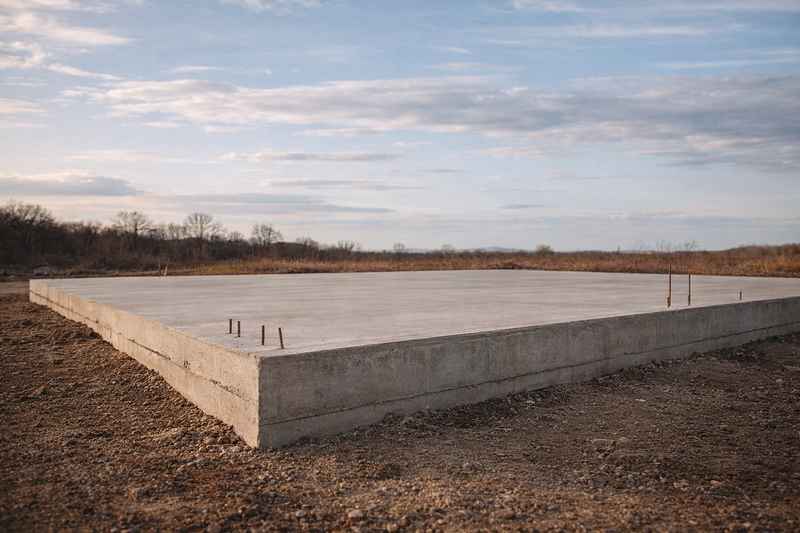
The results you can see are almost never where the real work is.
The real work is the skill you built quietly. The decision you made correctly under pressure, with no one watching. The system you refined when it didn’t have to be good yet. The week you showed up when the scoreboard said nothing back.
That work is in the foundation. And foundations don’t show. They just hold.
When the visible results finally come — and they will come, if the structure is sound and you stay in it — you won’t be surprised. You’ll recognize them as the readout from work you already did, months before anyone could see it.
Invisible progress is still progress. It’s just progress with a delayed receipt.
Melanie Brown is the founder of Bluedobie Developing, a rural Kentucky-based SaaS and web development company. She writes the Bluedobie Dialogues series about systems thinking, sustainable business architecture, and what durability actually looks like in practice.