
What Ocho Rios Taught Me About Building a Business That Doesn’t Collapse When I’m Gone
Most business advice about vacation is really advice about guilt. How to manage it, how to outrun it, how to schedule around it. The…
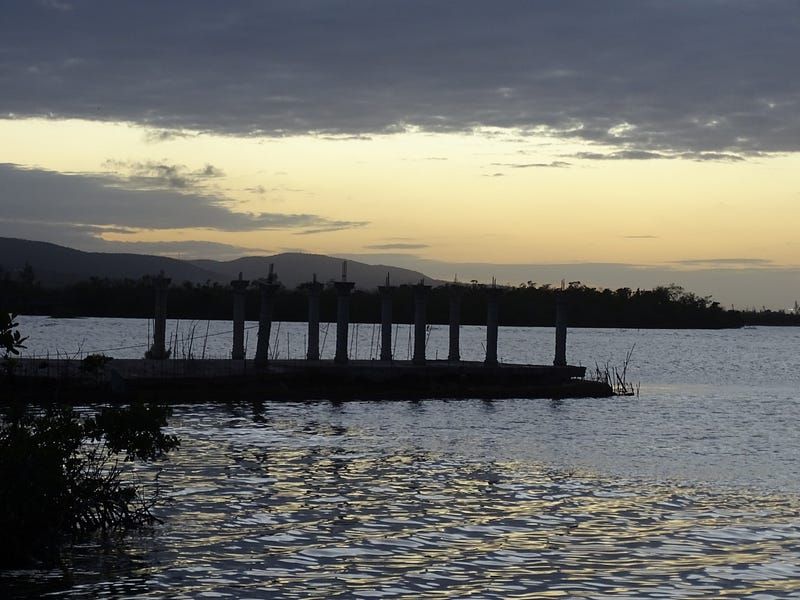
Most business advice about vacation is really advice about guilt. How to manage it, how to outrun it, how to schedule around it. The assumption underneath all of it is that time away creates a debt your business will collect on later.
I do not think that framing is true.
If your business needs your constant presence to stay upright, it is not really a business. It is a shift you cannot clock out of.
I spent a week in Ocho Rios with Anthony, and what stood out to me most was not just the water, the food, or the slower pace, though all of that was very real. What stood out was how much easier it was to see my own business once I was outside of it. Sometimes you do not fully see your systems until you step back far enough to watch what happens without you in the middle of everything.
Three things came into focus for me, and I wanted to get them written down before they blurred.
Rest is a load-bearing part of the structure, not a reward for finishing
I used to treat rest like something I had to earn. Finish the launch, then rest. Clear the inbox, then rest. Ship the feature, then rest.
Which, of course, meant I almost never rested, because there is always one more thing.
What I believe now is this: if a business only works when the owner is operating at full capacity, then there is no margin built into it. The first bad week hits, a migraine, a family emergency, a dog needing surgery, a tech issue, and suddenly the whole thing wobbles.
That is not stability. That is a system with no room to breathe.
Rest is not the reward for building something well. Rest is one of the signs that it is built well in the first place. If I can step away for a week and everything does not immediately catch fire, that is not luck. That is design.
That was the real test while I was in Ocho Rios. Scheduled content still ran. Clients who reached out got an auto-response that sounded like me because I wrote it that way ahead of time. Nothing spiraled. Nothing broke.
That did not happen by accident. It happened because the structure could carry weight I was not actively holding in that moment.
Local knowledge beats trend-chasing almost every time
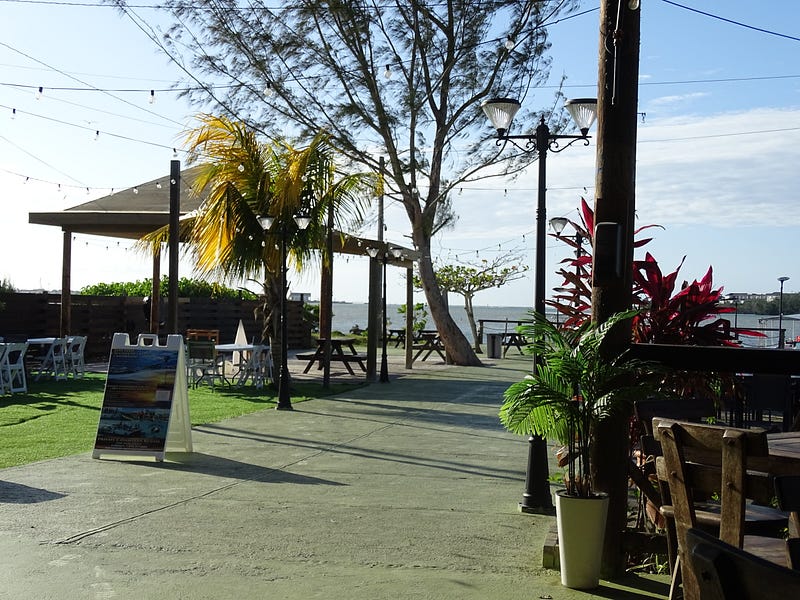
There was a small place off the main road in Ocho Rios where the owner cooked, her son ran the front, and the music was whatever she felt like playing that afternoon. No menu optimization. No polished brand script. No carefully packaged experience.
The food was excellent, and the place stayed full.
What struck me was that she was not trying to compete with the big resort restaurants by becoming a smaller version of them. She was doing something they could not do. She was specific. Specific to her family, her neighborhood, her cooking, her taste, her way of doing things.
That specificity was the offer.
I think that applies to business more than people want to admit. Especially in SaaS and service work, there is such a strong pull to look at what the biggest players are doing and then build a smaller, shinier, more affordable version of that. Most of the time, it just makes you easier to ignore.
What works better is building from what is actually yours. Your community. Your perspective. Your skills. Your weird little overlap of experience that somebody else does not have.
Specificity is hard to copy. Generic is not.
For me, that means Bluedobie is a rural Kentucky operation with a blue Doberman, a Rottweiler, a husband in law enforcement, and a founder who still writes her own code and her own captions. I do not need to sand that down to look more polished. That is the brand. That is the texture. That is the part people actually remember.
Flexibility is a design choice, not a personality trait
A few days into the trip, it rained most of the afternoon. We had planned to be outside. That plan was over.
What I noticed, though, was how quickly local vendors adapted. Not dramatically. Not with a bunch of visible stress. They just shifted. The beach setup became the covered-patio setup. The outdoor market tucked itself under an awning. Nobody acted like the world had ended because it rained. They adjusted because rain was already part of reality.
The system already knew rain was possible.
That is the kind of flexibility I want in my business. Not the frantic version where every change feels like an emergency, but the quieter version where there is already an alternate path built in.
A client cancels. A launch date slips. A feature breaks. A week goes sideways.
The issue is not whether those things happen. They will. The real question is whether the business has any “rain plan” built into it when they do.
I have not always gotten this right. I have absolutely had weeks where one change triggered three days of scrambling because I had built things too tightly. Every time that happens, the lesson is usually the same: I optimized for ideal conditions when I should have been designing for real life.
The part nobody talks about enough

Here is the part I do not think gets talked about nearly enough: a real vacation does more than rest your body. It interrupts the story you have been telling yourself about your business.
The story that everything is urgent.
The story that you are the only one who can do the thing.
The story that stopping means falling behind.
A week of not being reachable is a week of that story being proven wrong.
The business does not actually require you every minute.
The work does not instantly collapse.
The thing you thought you had to hold up with both hands may have been standing on its own more than you realized.
That is the real insight I brought home from Ocho Rios.
Not a new productivity trick.
Not a dramatic mindset shift.
Just a quieter correction.
A lot of what I thought was load-bearing was really just familiar.
The real architecture was still standing.
Melanie Brown is the founder of Bluedobie Developing, a rural Kentucky-based SaaS and web development company. She writes the Bluedobie Dialogues series about systems thinking, sustainable business architecture, and what durability actually looks like in practice.