
The Woman Who Became My First Safe Place
Chapter Four of The Woods Behind Me — On quiet strength, memory, and the kind of love that stays
Chapter Four of The Woods Behind Me — On quiet strength, memory, and the kind of love that stays
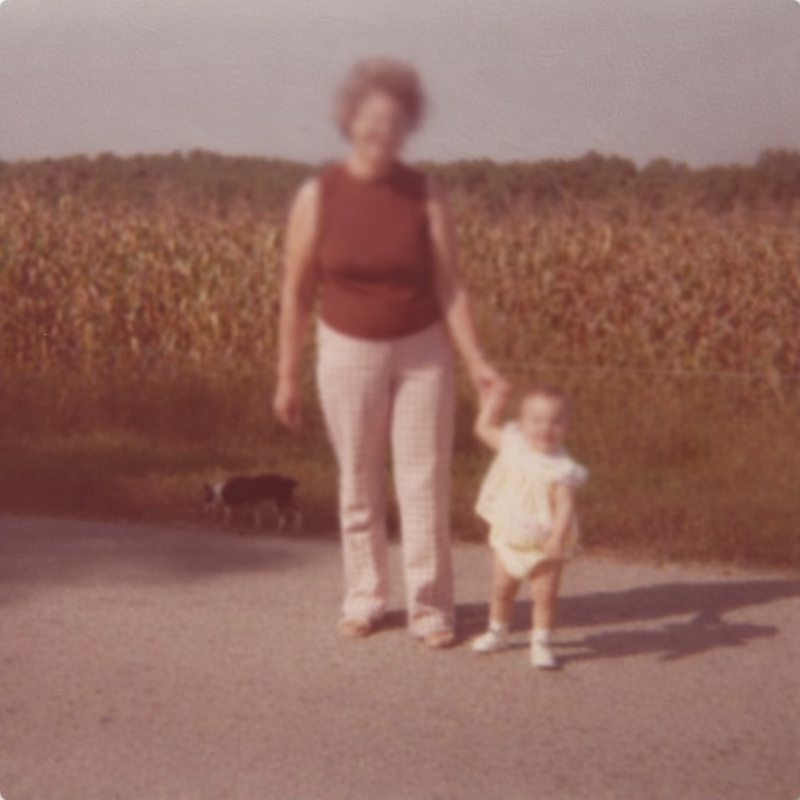
I bonded to Grandma instantly.
No hesitation. No warming-up period. Just something inside me recognizing safety the way a plant recognizes sunlight.
She held me like I mattered. Spoke to me like I was already someone. Moved through the world with a softness that made room for both of us.
And I loved her long before I understood what love even was.
After Thomas and Sharon brought me home from foster care at ten months old, life shifted quickly. We moved from Pennsylvania to Kentucky, into the small house where Sharon’s mother waited. The adoption wasn’t fully complete yet — child services still had to do their inspections, making sure I’d be safe. Thomas was gone on the ship for most of that time. Long stretches of absence that come with Navy life. Child services saw him maybe once.
What they saw, every time they came, was Grandma.
And whatever they were looking for when they looked at her, I think they found it. Because she was the kind of woman who communicated safety without trying. It wasn’t performance. It was just her nature, the same way some houses smell like something good the moment you walk through the door.
I was ten months old and I already knew the difference.
The Cobbler
Grandma never called it a recipe.
She called it “a little something sweet.”
I learned it the way she taught everything — by standing beside her, watching her hands, the kitchen warm in that particular way that only her kitchen ever was. Flour on her apron. The smell of butter beginning to brown. Her voice easy and unhurried, like there was nowhere else either of us needed to be.
What you need:
1 cup self-rising flour (or 1 cup all-purpose flour + 1½ tsp baking powder + ¼ tsp salt)
1 cup sugar
1 cup milk
26–28 oz canned fruit — peaches were my favorite, she loved apple
Cinnamon, just enough to make it smell like home
2 sticks unsalted butter (yes, two — don’t question a Southern woman’s butter)
How she made it:
Heat the oven to 350°F. Put the baking pan in with both sticks of butter. Let them melt and turn the color of early autumn — that deep browned-butter gold that lets you know the flavor’s waking up. While the butter does its thing, mix the flour, sugar, and milk in a bowl. Stir until smooth. No fuss. No overthinking. Pour the batter into the hot pan — the butter will slide up the sides like it knows what comes next. Add the fruit right on top, juice and all. Sprinkle cinnamon like a blessing.
Bake for about one hour, until the top rises, cracks, and turns the color of memories you didn’t know you’d kept.
Let it cool just enough to not burn your tongue. And if you’re eating it the way she meant it to be eaten, serve it with vanilla bean ice cream and someone you love at the table.
That’s the whole recipe. It takes less than ten minutes to put together and about an hour to fill the house with something that smells like her.
I still make it. I always will.
The Soft, Everyday Kindness
Grandma’s kindness wasn’t grand.
It wasn’t showy. It lived in small, ordinary gestures that stacked up into a life’s worth of gentleness.
Every Father’s Day she baked pies — for the bachelor next door. A man with two grown sons who rarely visited.
“He shouldn’t sit through the day without something sweet,” she’d say, sliding a pie onto the cooling rack. “It brightens a man’s heart.”
That was her. Kindness for kindness’ sake. Not because anyone would notice. Not because anyone would thank her. Just because she had thought of him and had the flour and the time.
She fussed at me one afternoon for leaving the refrigerator door open, and when I burst into tears — startled by the sudden sternness — she came to me crying too.
Held me. Apologized. Rocked me gently, whispering that she hadn’t meant to scare me.
That was her too — soft, tender, unable to stand the thought of hurting someone she loved. A woman whose instinct, when she caused pain, was not to explain herself or defend herself but to reach for you.
And then there were the laughing fits.
Some days we’d sit at her table and get ourselves so tickled over something small — a silly comment, a memory, or absolutely nothing at all — that we’d end up wiping tears from our eyes, gasping for air between giggles. The kind of laughter that doesn’t have a cause you could explain later. The kind that is its own reason.
This particular episode happened when I was fifteen.
Grandma swore her house had a ghost that hated dogs. I didn’t believe her until the night her touch lamp started flickering like a haunted disco.
Every time she walked down the hallway, the lamp stopped. Every time she turned back toward the kitchen, it started again.
I legitimately planned my escape to Kansas City.
Finally, Grandma stormed down the hall, marched right up to that lamp, and unplugged it with the authority of a woman who had raised her children and fought the devil with a casserole spoon.
The lamp died instantly.
Some people fight demons with holy water. Grandma used a lamp cord.
Those weren’t big stories.
But they were big moments. The kind that stitched two souls together without either one realizing it was happening.
Her Strength, Quiet but Unshakable
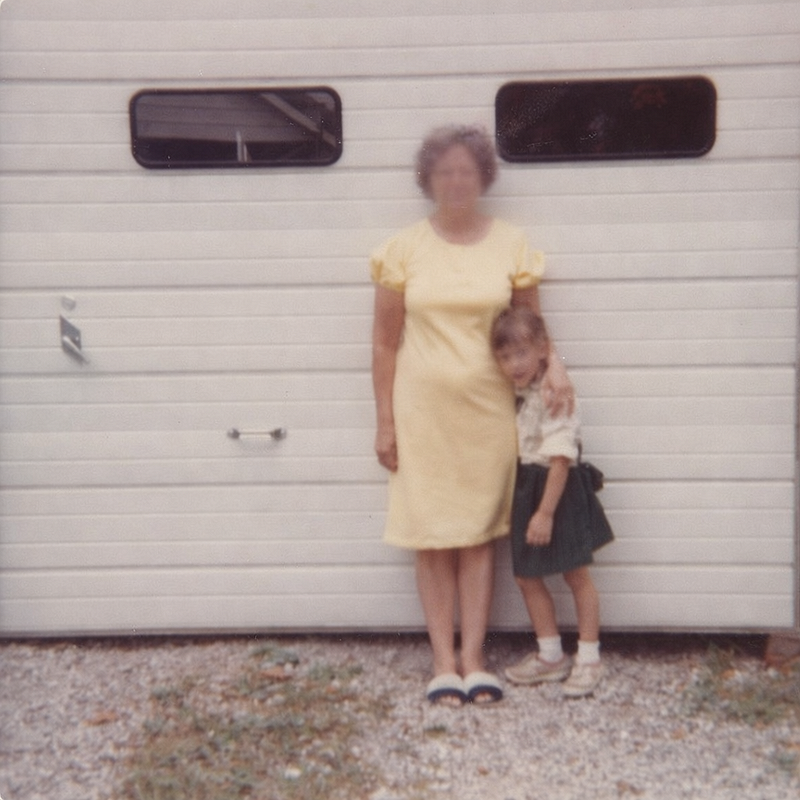
Grandma was gentle, but she wasn’t weak.
Her strength lived deeper than muscle or volume. She worked hard, loved harder, and held a quiet resilience that didn’t draw attention to itself. Even when life wasn’t kind to her, she remained kind to the world.
As I grew older, I watched age begin to tug at her edges. Little moments where her thoughts snagged. Where her body couldn’t keep up with what her heart wanted. Small slips that none of us recognized for what they were at the time — the early warnings of something larger moving toward her.
When the stroke came, it took pieces of her that she never fully got back.
I watched Grandma navigate the aftermath of her own kind of diminishing. Years later, I watched Thomas’s edges soften with age and then watched his memory begin to go. Different losses, different shapes — but the same helpless feeling of standing beside someone you love while something takes from them and you cannot stop it.
What I noticed, in both of them, was what stayed.
With Grandma, even in confusion, even in the harder days that followed — the core of her remained. The softness. The humor. The instinct to comfort. The love that filled whatever room she was in.
Some people, when the edges wear away, reveal something harder underneath. That was never Grandma. What wore away was only the surface. Everything underneath was exactly what it had always been.
She was my first best friend.
And she stayed that way until the end.
What She Left Behind
If the woods taught me that some children should never be left behind, Grandma taught me the companion truth:
The people who shape us most are the ones who stay steady — not through perfection, but through presence.
Her love wasn’t sweeping or dramatic. It wasn’t wrapped in speeches or symbolism.
It was pies cooling on a rack for a man eating Father’s Day alone.
It was laughter over nothing, both of us breathless at her kitchen table.
It was arms around a little girl she had already decided was worth holding.
It was simply being there — reliably, quietly, without requiring anything in return.
I carry her forward every time I show up for someone who needs steadiness. Every time I make the cobbler. Every time I choose presence over performance.
The quiet kinds of love are the ones that last. Not because they’re gentle — but because they’re true.
Melanie Brown writes Bluedobie Dialogues, a publication exploring resilience, systems thinking, and the quiet architecture of survival. She is the founder of Bluedobie Developing and writes from rural Kentucky about technology, memory, and the complicated ways people learn to heal.
This is part of an ongoing memoir series. The next chapter will be published next week.
Names have been changed to protect the privacy of those included in this story.