
The Season After the Storm
Kansas City, My 17th Birthday
The Woods Behind Me: Chapter Three
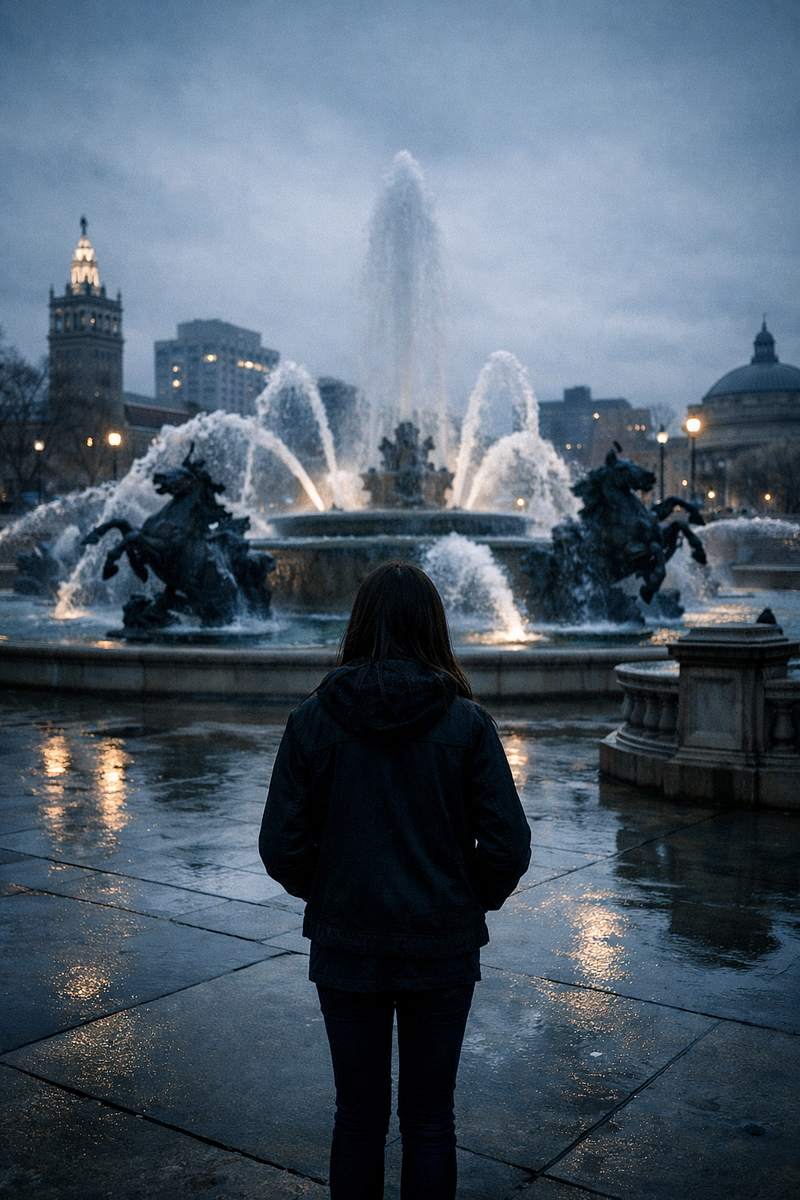
My seventeenth birthday.
The night my high school sweetheart nearly killed me.
Some storms don’t come from weather.
Some storms walk into your life wearing a familiar face, speaking soft promises, holding your hand — and then destroy you on the one day that was supposed to be yours.
In Kansas City — the City of Fountains — water was everywhere. On every corner. In every plaza. Decorative and constant, their rushing sound a backdrop I couldn’t escape. I had grown up with the woods at my back. Now I had fountains. Water following me into every version of my life, it seemed, whether I wanted it or not.
He was my high school sweetheart.
The boy I trusted.
The boy I believed.
The boy who had a date with my friend that same night — a knife in the heart and the back.
By the time I realized how dangerous he was, I was already deep in the storm’s eye — where everything looks calm right up until the sky drops.
That night didn’t feel real, not at first. Not in the way trauma should feel. It was too quiet, too sudden, too impossible to understand while it was happening.
One moment I was living through it.
The next, I was alive but shattered, walking through the days afterward as if someone else had taken over my body.
I don’t remember much about that night. Not the way memory is supposed to work.
Just fragments. Being knocked down. Fighting for my life. Violence moving through the apartment like a storm with no center — room to room, wall to wall, his hands, my body, the impossibility of understanding what was happening while it was happening.
The last thing I remember clearly: him slamming my head into the closet wall.
Then I’m lying on the bathroom floor. Right next to where it happened. And I hear my own voice, distant and strange, asking him if he wants a bath.
He had nearly killed me.
And I was offering to draw water for him.
Shock does that. Makes you perform caretaking for the person who just broke you. Makes normalcy seem possible when nothing is normal anymore.
The night that followed was the longest kind of quiet — not peaceful, just suspended. The kind where the body is still running its emergency systems and the mind hasn’t caught up yet. Where you lie in the dark and the darkness doesn’t feel like rest. It feels like waiting for something to make sense that never will.
Nothing made sense.
I was seventeen years old.
The Day After
The next day, I went to Watermelon Fest.
My sorority house was throwing a mixer. Watermelon and alcohol — a beautiful, drowned path to oblivion. I was just so grateful I didn’t have to think.
I smiled. I drank. I moved through the party like a ghost wearing someone else’s skin.
That night, I called home.
The phone rang once, twice.
“Hello?” Sharon mumbled, sleepy.
“Hey Mom, I’m staying at the sorority house tonight. I’ve been drinking. I’ll see you in the morning.”
“Okay,” she said. “Be safe. I love you.”
“I love you too.”
Normal. Responsible. The kind of phone call any college kid makes.
Except I was covered in bruises from being nearly killed the night before.
I didn’t realize how bad I looked until my sorority sisters got the film developed weeks later. There I was in the photos, smiling at the camera, cup in hand.
It looked like someone had taken a baseball bat to every visible piece of skin.
Fall: Trying to Make Sense of Violence
I was so blitzed on alcohol and shock that I believed we would get back together.
That the violence was an aberration.
That love could survive what he’d done.
I would learn I was wrong about many things in those months after. But I would also learn that some of the hardest truths to carry are the ones tied to people you can’t stop loving — even when you know you should.
November: When the Rain Came
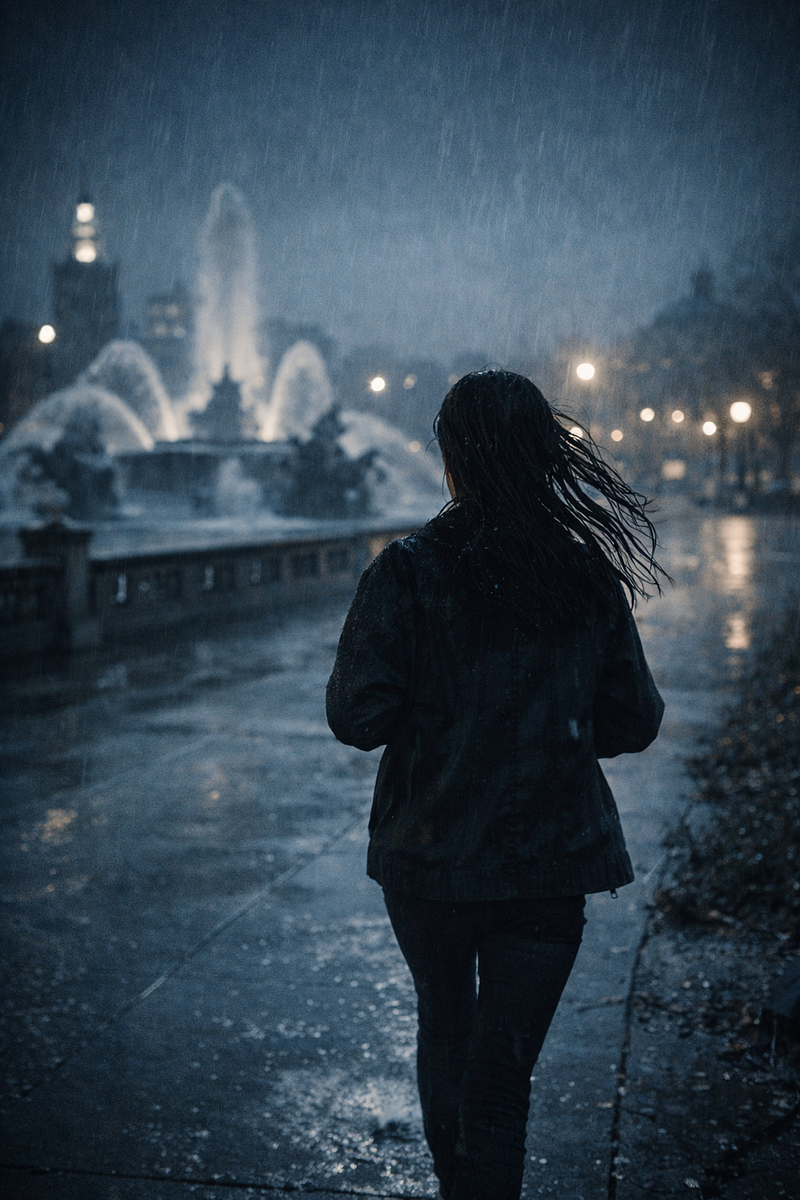
By November, I was running through Kansas City rain, crying.
Cold. Relentless. Water in my hair, on my face, mixing with tears I couldn’t stop.
Somewhere, “November Rain” played — nine minutes of Axl Rose wailing about pain I suddenly understood.
The fountains kept rushing.
The rain kept falling.
The relationship was over.
And I was drowning.
December: The Collapse
By December, I couldn’t get out of bed.
I barely spoke.
I refused to eat.
I stared at walls like they held answers I couldn’t find anywhere else.
Time passed around me. Days moved. I didn’t.
The fountains were still out there somewhere, still rushing, still decorative, still constant — indifferent to the fact that I had gone completely still.
Mom watched me disappear.
And when I didn’t come back, she did what terrified mothers do.
She took me to the doctor.
That’s how I ended up sitting in a doctor’s office with a paper gown sticking to my skin and no sense of where my life was supposed to go next.
He had nearly killed me.
And instead of healing, I was being evaluated — as if the violence written on my body meant something broken inside me.
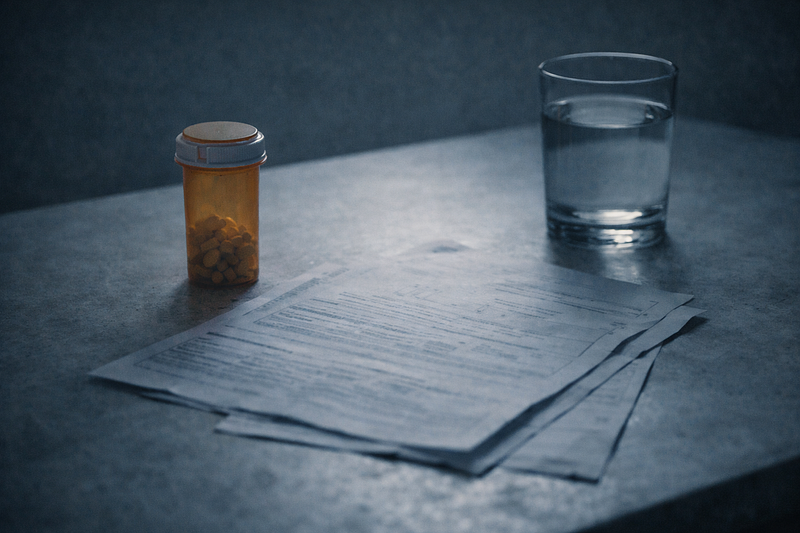
PATIENT DISCHARGE SUMMARY
(As It Might as Well Have Been Written)
Patient Name: Larkin, Amanda Leigh
Date: [Left blank]
Presenting Condition:
Bruising. Emotional distress. Recent assault by intimate partner.
Patient tearful but ambulatory. Vital signs stable.
Provider Notes:
Mood instability observed. Possible bipolar disorder.
Recommend pharmacological intervention.
No immediate physical intervention required.
Assessment:
Psychiatric etiology suspected. Trauma history noted but not explored.
Patient directed to return home.
Prescription:
Paxil — Take one daily.
No titration required. No monitoring scheduled.
No contraindications discussed. No crisis resources provided.
Follow-Up:
None arranged. Patient advised to contact office “if needed.”
Phone lines documented as busy.
Discharge Condition:
Released to self-care. No safety plan. No supervision recommended.
Signature:
The doctor you saw for twelve minutes.
(Illegible)
A Diagnosis Instead of Care
The doctor used words I had never heard before.
Words about moods and cycles and danger.
Words that made my mother go pale.
Words that felt like blame disguised as medicine.
“Bipolar.”
A word that shouldn’t have been delivered like a verdict.
No one told me what it meant. No one told me what it required. No one told me it was for life.
The doctor wrote a prescription for Paxil as casually as someone signing for a package. No talk. No safety plan. No explanation. No follow-up appointment.
Just: “Take one every morning.”
That was the moment I learned that sometimes the people we call helpers do not help at all.
I walked out with a diagnosis I didn’t understand and a bottle that would make everything worse.
Two Weeks of Falling
I took the pills like I was told.
At first, nothing happened.
Then everything happened.
My sadness, already heavy from the violence I had survived, deepened into something bottomless. I fell through myself like the floor dropped out from under my heart.
I cried without reason.
I slept without rest.
I felt myself slipping away like a memory dissolving in water.
Mom called the doctor. Called again. Begged the receptionist. Begged the nurse. Begged anyone who would listen.
No one called back.
Two weeks passed. Two weeks of sinking while the world looked the other way.
And then Mom made the decision the doctor should have made.
She told me to stop the medicine. Not because she wasn’t scared — but because she was terrified of what would happen if I didn’t.
So we stopped. Cold turkey. Alone. No guidance. No tapering. No safety net.
Just survival.
Abandoned Twice
The boy had abandoned my life violently.
The doctor abandoned my life quietly.
Both hurts cut deep.
Both taught me something I didn’t have words for then but would understand clearly later:
Sometimes the people who claim to protect you leave the deepest wounds.
Sometimes the people with authority are the ones who fail you the fastest.
And sometimes the ones trained to save your life won’t lift a finger to prevent you from losing it.
What That Year Made Me
It wasn’t the diagnosis that scarred me.
It wasn’t even the medication.
It was the betrayal. The moment I understood that not everyone who picks up responsibility actually intends to carry it. That a white coat and a prescription pad can occupy the same space as genuine indifference.
I was seventeen, and I had been abandoned twice in the same season — once with violence, once with paperwork. And somewhere inside that terrible year, something in me made a decision I wouldn’t consciously recognize for a long time: I would not do that to people.
I would not be the one who put down the life they were holding.
Not my father, who needed me to guide him through rooms he couldn’t place.
Not my children, not my grandchildren, not anyone who looked to me for something steady when their own ground had gone soft.
I didn’t have the language for it then. I was just a girl with bruises in party photos, trying to get through December.
But the commitment was already forming.
The way things form in dark seasons — quietly, underground, before anyone can see them.
I had survived violence, misdiagnosis, a medication that dragged me under, and a system that treated me like paperwork instead of a person.
The story didn’t end there.
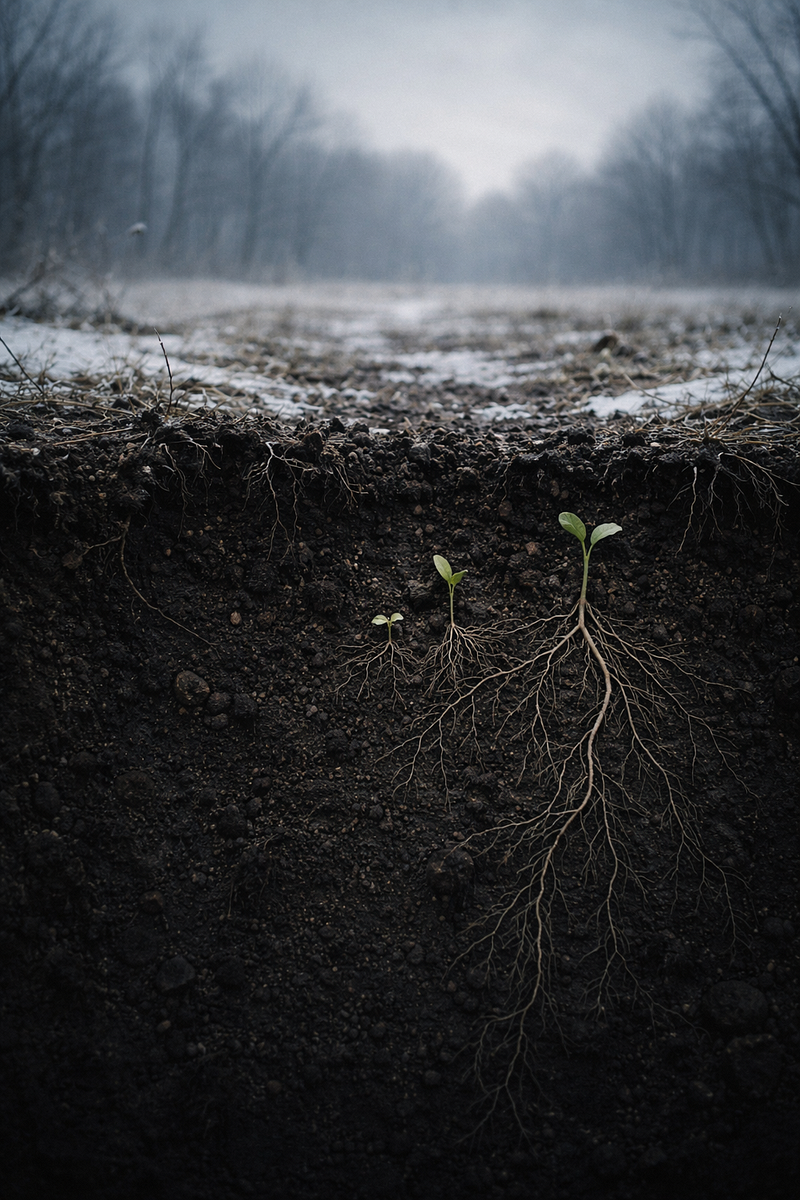
Because the girl who had been abandoned more than once was about to meet someone who had never once let anyone go.
Let me tell you about Grandma.
Melanie Brown writes Bluedobie Dialogues, a publication exploring resilience, systems thinking, and the quiet architecture of survival. She is the founder of Bluedobie Developing and writes from rural Kentucky about technology, memory, and the complicated ways people learn to heal.
This is part of an ongoing memoir series. The next chapter will be published next week.
Names have been changed to protect the privacy of those included in this story.