The Restaurant with the Glass Walls
What a small-town restaurant revealed about loyalty, work, and being worth the dollar.
What a small-town restaurant revealed about loyalty, work, and being worth the dollar.
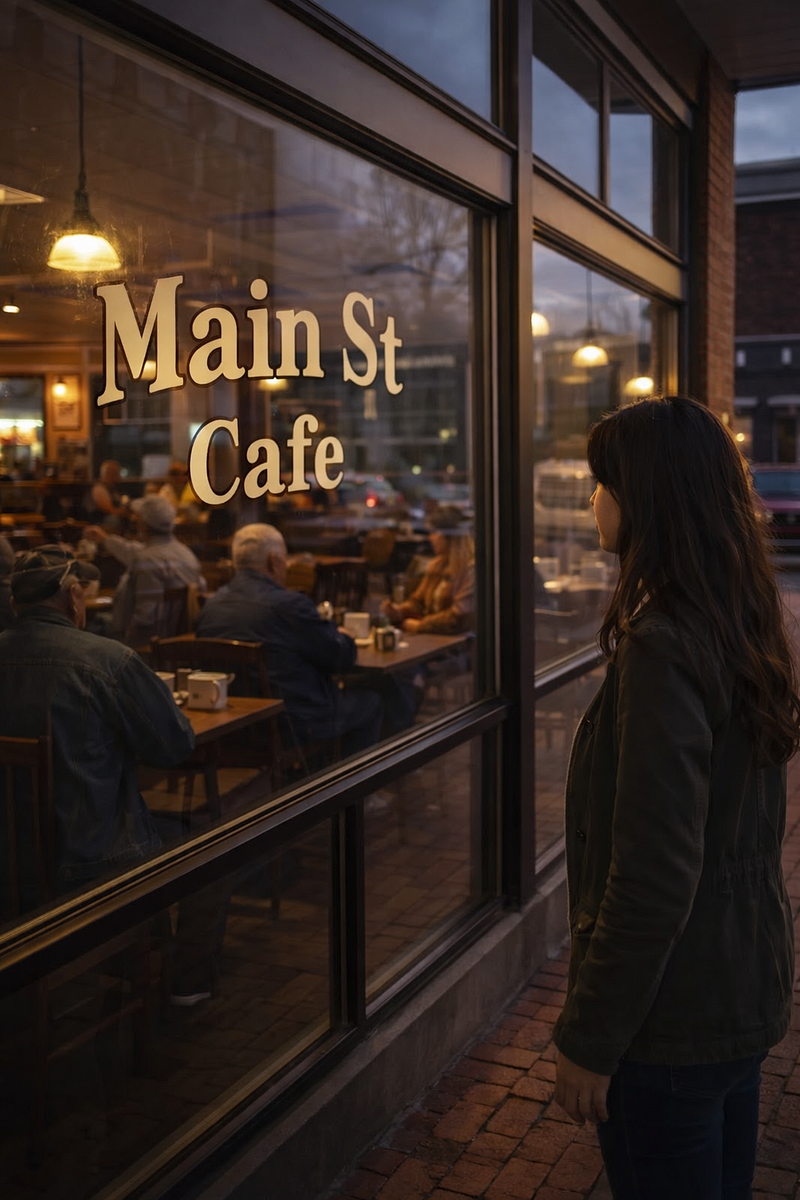
Twenty-two years after Mel and Barbara carried me out of those Pennsylvania woods, I found myself in another glass-walled place where people watched everything I did.
This time, though, I wasn’t helpless.
This time, I was essential.
That distinction mattered more than I understood then. There’s a particular kind of hunger that lives in a person who spent their early years on the wrong side of being chosen — not dramatic hunger, not bitter hunger, just a quiet, structural need to prove that you are worth keeping. I didn’t know that’s what I was carrying into that restaurant. I thought I was just going to work.
Main Street had a habit of watching people. Maybe it was the way the old storefronts leaned toward the road, or the way the streetlamps cast warm halos on the brick sidewalks at night, or the way the windows — huge panes of glass stretching from sidewalk to ceiling — let the whole town see everything happening inside.
The restaurant sat right in the center of it all.
A little place with a red sign that flickered sometimes, smelling like cornbread, coffee, and the kind of fried food that pulled in strangers off the road.
From the outside, those big glass panes made it look cozy. Inviting. Alive.
But on the inside, by 2001, it was dying. A slow kind of dying — the kind that sneaks up on a place when the owners lose their spark and the regulars start drifting toward cheaper meals or louder televisions. The kind of dying that looks, from the outside, exactly like it always did.
Until I showed up.
I wasn’t a child in the woods anymore. I wasn’t a girl waiting for someone to choose me. I was a woman who could cook a roast overnight, serve breakfast before sunrise, run a full section of tables, and still pull a buffet together before the lunch crowd pushed against the glass.
The town noticed.
People always notice when a place starts smelling like home again.
Those same big windows filled back up. Old men claimed their tables. Families drifted in after church. Teenagers flushed with awkward first dates sat at tables near the back. And as the seats filled, the restaurant took its breath again — not because of the owners, who barely understood what they had and would later prove it, but because I fed people well enough that Main Street itself started waking up.
The Old-Man Conference
The old men were my first loyalists — a whole council of denim jackets, suspenders, and coffee mugs that never ran dry.
They tipped me quarters at first. Every one of them. Shiny little offerings stacked neatly beside their coffee cups.
One morning, after a long shift, I pulled my daddy aside.
“Daddy, I can’t live on quarters. If they’re gonna sit and eat, I need at least a dollar.”
And I swear those words triggered a full-on Old Man Summit.
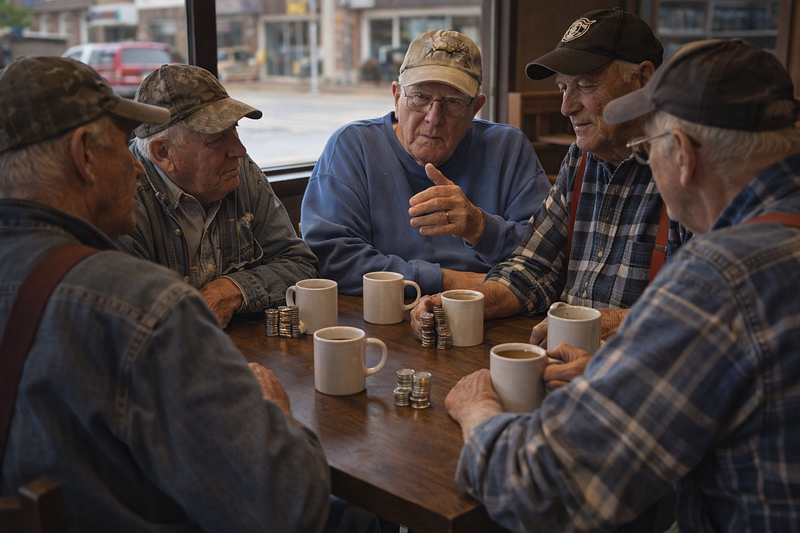
The next morning, the quarters were gone. Dollars — crisp or wrinkled, didn’t matter — started appearing instead. No speeches. No fuss. Just a quiet agreement among old men who respected my daddy and, by extension, respected me.
I’ve thought about that shift a lot since then. Not the dollars themselves, but what the dollars meant. Those men made a collective decision, without being asked directly, to adjust how they valued my labor. No negotiation. No pushback. Just a recognition, passed between them like a handshake, that what I was offering was worth more than they’d been paying.
And that was the day I realized: people know when someone is worth standing behind.
It would take me the better part of twenty years to believe it about myself.
Buffet Nights
Nothing stirs curiosity like a restaurant suddenly coming alive again.
I built the buffets from scratch: overnight roast that fell apart if you breathed near it, meatloaves baked to tender perfection, sides that reminded folks of Sunday dinners and family reunions.
Main Street saw the lights glowing behind the big windows, and people flocked toward the smell like moths with growling stomachs. By noon, the place packed out.
It wasn’t fancy. But it was home. And folks will choose home over fancy every time.
What I didn’t fully reckon with then was what it meant to be the person making a place feel like home. There’s a cost to that. Not a bad cost, not resentment — just the weight of being the thing a place depends on. When you’re essential, you’re also exposed. Essential things can be removed. And when they are, what’s left knows exactly what it lost.
The Origin of Red-Eye Gravy
Red-eye gravy came from one old man — a regular who showed up once a week like sunrise.
His order never changed: country ham, eggs, biscuits, and a bowl of red-eye gravy.
He told me stories while I cooked — tales of backroads, hog killings, and breakfasts hearty enough to keep a man working till sundown. And somewhere in those stories, he taught me the secret: coffee, pan drippings, salt. And just enough burn to water your eyes if you inhale wrong.
When he tasted my first attempt, he tapped the table twice.
“You got it, girl.”
Blessing given. Lesson learned.
Those two words did something specific in me. Not the compliment itself — compliments were always a little slippery, hard to hold. It was the transmission. He had knowledge. He decided I was someone worth passing it to. That’s a different thing than being praised. Being chosen as the keeper of something — a technique, a story, a way of doing a thing right — is its own kind of recognition. One that goes deeper than applause.
I carried that gravy recipe forward. I carried a lot of things forward from that kitchen.
The Firing
The restaurant was thriving. Buffets full. Tables turning. Regulars returning.
The owner showed up on the day I was to return to work after getting on meds and stabilizing. She sent my manager to talk to me. We stood outside, where customers could not hear. He avoided eye contact, using careful language. Mentioned “image.” Mentioned what people would think. Mentioned liability.
His final words said all I needed to hear.
“We can’t have someone on mental health medication working here.”
They fired me. Not for poor work. Not for mistakes. Not for attitude.
For being human.
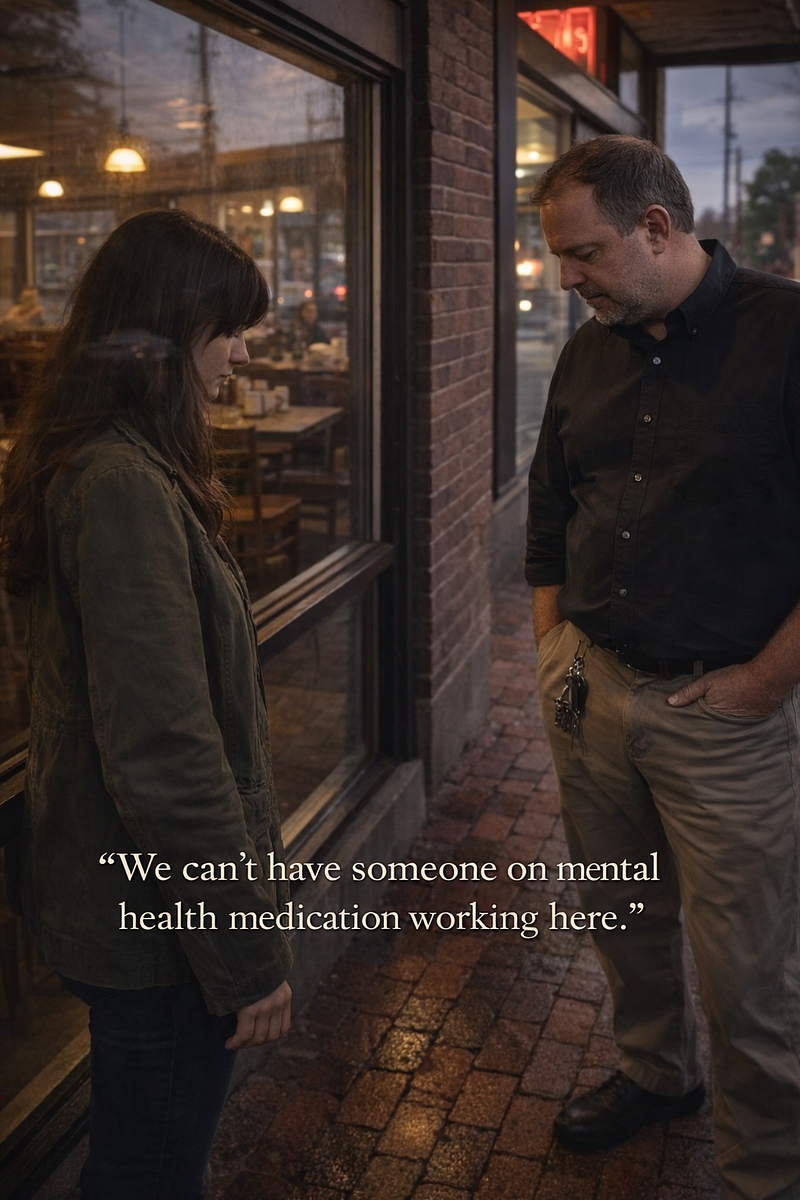
I didn’t argue. There was nothing to argue. The decision had already been made somewhere above the conversation happening in front of me. He still wouldn’t look at me.
I nodded once. Said, “Okay.”
Through the glass, I could see the coffee steam rising from the old men’s table. I could hear the low murmur of their morning debate about nothing in particular. The red sign above the door flickered like it always did.
I walked back inside long enough to grab my purse.
No one announced anything. No one made a scene. The world kept moving the way it always does when something personal is ending.
What I want to say about that moment, now that I’ve had years to turn it over: the shame they were trying to assign didn’t stick. Not because I was particularly strong — I wasn’t, not that day. But because the logic of it was so obviously broken. I had built something real in that place. The evidence was on every table, in every full coffee cup, in the weight of the buffet trays at noon. Whatever I was managing in my own nervous system had not prevented that. I had fed people well. I had shown up. I had been worth the dollar.
Being fired for being on medication was their failure of imagination, not mine.
I understood that intellectually the day it happened. It took considerably longer to understand it in my body.
What the Windows Saw Next
The next morning, my daddy told them why.
He didn’t embellish. He didn’t raise his voice. He just told the truth.
By the end of that week, the quarters and dollar bills stopped appearing on the tables. The denim jackets found other coffee. The chairs near the windows stayed empty longer than they should have. The buffet trays didn’t empty as fast. The place that had once felt like it was breathing again began to sound hollow.
No speeches. No fuss. Just a quiet withdrawal.
Less than two months later, the big windows went dark. No more coffee steam rising before sunrise. No more old men arguing about weather and politics and whose tractor ran better in 1972. No more families crowding the buffet line.
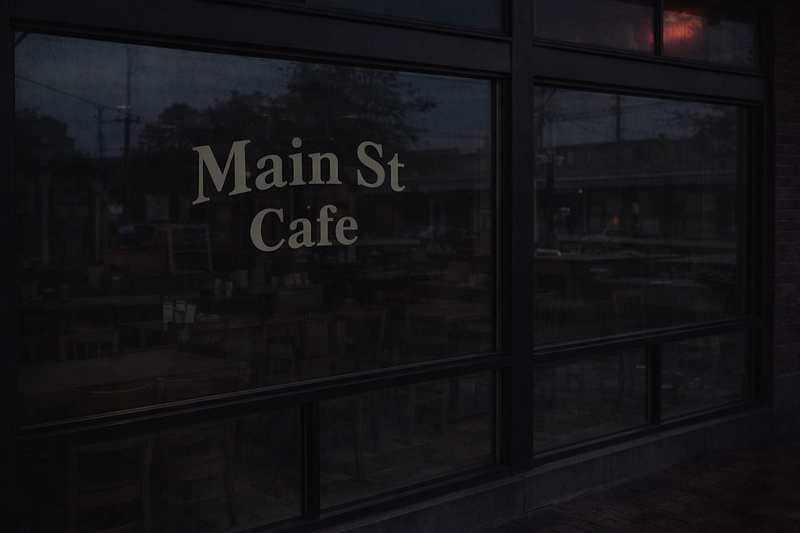
The doors locked. The red sign dimmed. And Main Street kept watching.
I learned something that year that would follow me long after the restaurant was gone: when you build something with your whole hands, people feel it. And when you’re removed from it, they feel that too.
The old men didn’t need anyone to explain what had happened. They understood the transaction. They’d been paying attention the whole time, through those same glass windows where everything was visible.
That’s the thing about being watched. You assume it’s surveillance. Sometimes it’s witness.
Some places don’t die because the food goes bad.
They die because the heartbeat leaves.
Melanie Brown writes Bluedobie Dialogues about resilience, systems, and the long road of building a life after the woods.
This is part of an ongoing memoir series. The next chapter will be published next week.