
The Man With Two Shadows
Caregiving, memory, and the complicated mercy of loving someone who once hurt you.
Caregiving, memory, and the complicated mercy of loving someone who once hurt you.
The Woods Behind Me: Chapter Two
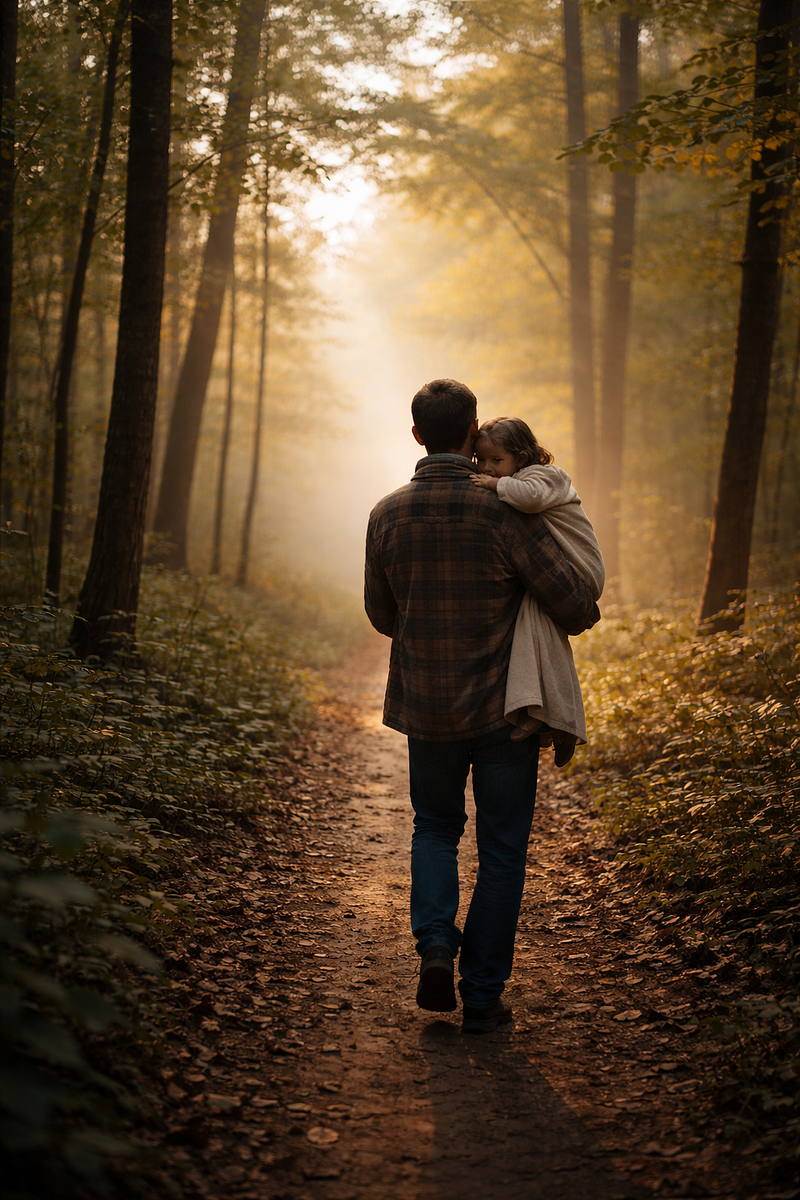
Before I became the woman who saved that restaurant, I was the child of a man who saved me — a man I would one day learn to care for in ways neither of us could have imagined.
Let me tell you about Thomas.
My daddy was a man whose goodness arrived in bursts — bright, startling, and unforgettable — and whose darkness came quietly, like a draft under a door.
He wasn’t the hero of my childhood, not always. Some days he was the storm. Some days he was the silence after it. Some days he was the man who rescued a baby from the woods, and some days he was the man that same baby learned to tiptoe around.
People like to make fathers into saints or monsters.
But mine was neither.
He was a man with two shadows.
The First Biscuits I Ever Made (and the Gravy That Nearly Wasn’t)
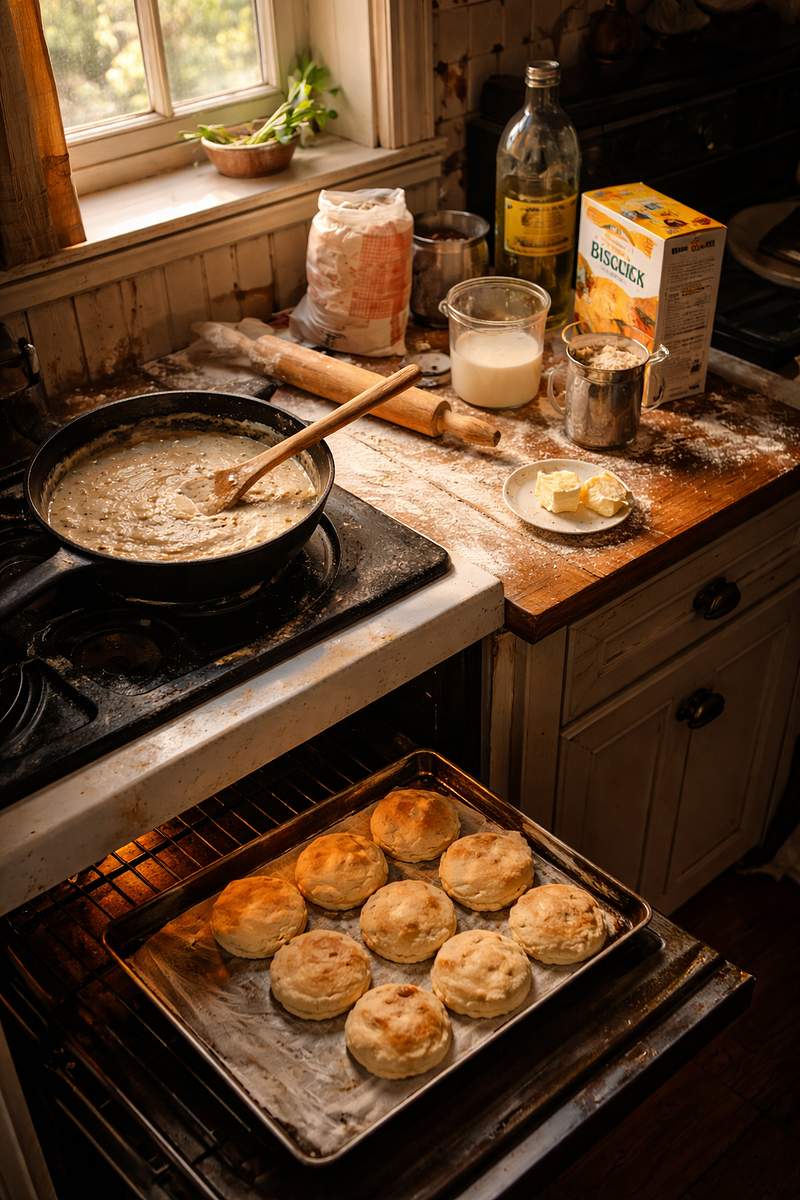
I was eight the first time I tried to cook something real.
Biscuits — the Bisquick kind — and white gravy, because in my child-brain that was the height of Southern hospitality. I wanted to make breakfast in bed for my mom and dad like I’d seen in movies.
Nobody had taught me how to make a roux. Nobody had explained that flour needs more than half a cup of milk to turn into gravy instead of paste.
I mixed the oil and flour in the skillet, tossed in salt and pepper like I knew what I was doing, and when it browned, I added what little milk I thought was enough.
It wasn’t.
The mixture seized into something between glue and regret.
Convinced I’d ruined everything, I dumped it out and started over — heart thumping, biscuits baking, determination bigger than my eight-year-old body.
The second time, I used more milk. It thinned out. It came together. It became gravy. Not perfect. Not restaurant worthy.
But real.
Sometimes you have to go through the rough part to get to the good part. Sometimes the first batch burns so the second one can turn out right.
It was the first thing I ever cooked for them. The first offering of love I ever made with my own hands. The beginning of understanding that feeding people was a way of saying,
I’m here. You matter. I’m trying.
Two shadows. One long and soft, falling over me with protection. One sharp-edged, falling over the house in ways a child can’t understand until she’s grown.
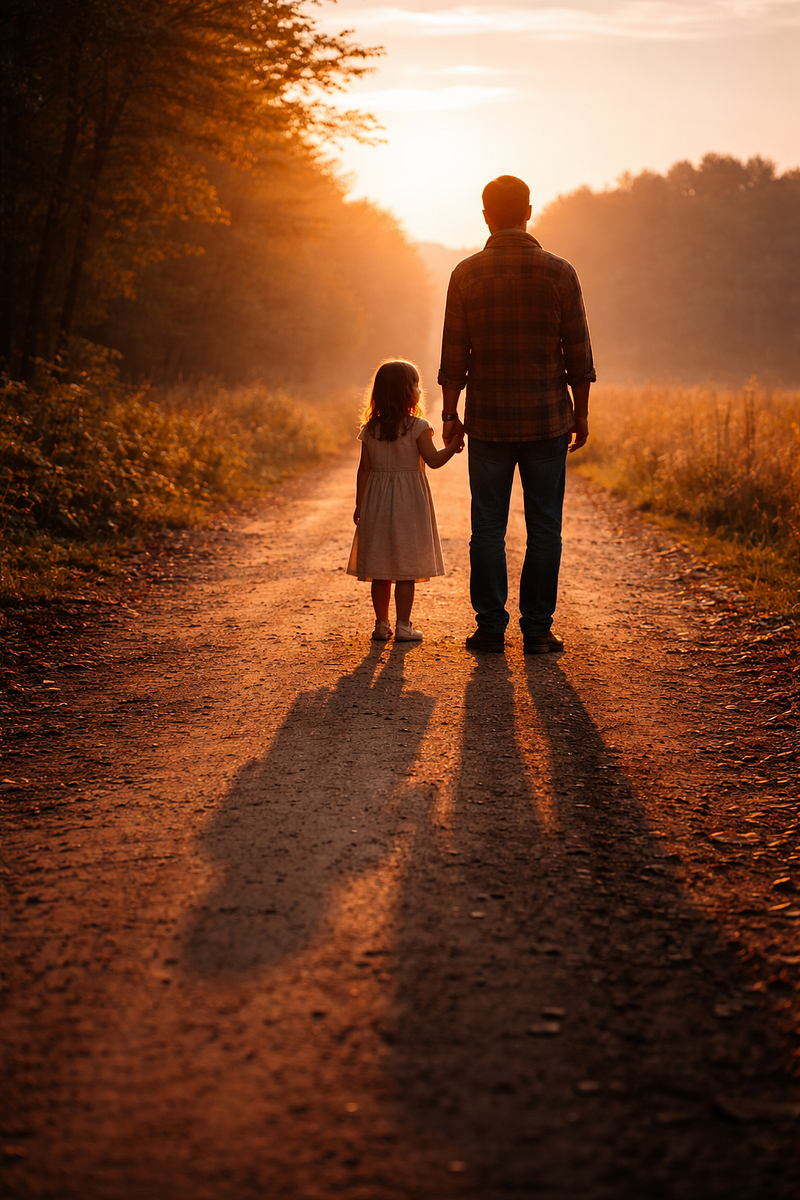
I won’t list all the memories. They live in the cracks, not in the chapters. But they shaped me — not to fear him, just to learn early that love can be loud one day and quiet the next, steady one minute and uncertain the next.
Some memories don’t live in the chapters. They live in the body — in the way a child learns early that love and violation can wear the same face, that the person safest to the world can be the least safe to you. I won’t catalog what happened. It isn’t necessary. What is necessary is this: for eight years, the man with two shadows did harm that had nothing to do with his temper and everything to do with his choices. Harm that a child has no language for until she is long past needing the words to survive it.
And still — this is the complicated part — he also carried me out of the woods.
Both things are true. That is the specific cruelty of this kind of childhood: the person who hurt you is also the person who saved you, and you spend decades learning how to hold that without it breaking you in half.
He didn’t always know how to show love without letting the rougher parts of himself spill through.
And I was a child growing up like a wildflower — rooted in the wrong dirt some days, blooming anyway.
A Man Who Changed Slowly, and Then All at Once
Time reshapes people. Sometimes gently. Sometimes like erosion — slow, steady, wearing the edges down until a different shape emerges.
The older my daddy got, the softer he became. Not soft like weak. Soft like water rounding rock.
He began calling me “Amanda,” not Monkey. His laughter stayed longer. His temper didn’t.
He became the kind of man who sat with his coffee a little longer, held onto stories a little tighter, and raised his voice a little less. The two shadows he carried began to merge, and only the gentler one remained.
And then came the forgetting.
Not the kind that makes a man absent — but the kind that makes him small. Confusion settling over his eyes like weather moving in. Words slipping through the cracks in his memory. The strong man who once walked through the woods without fear now looked to me to navigate rooms he couldn’t quite place.
Life has a habit of circling back.
The man who carried me out of the dark now needed me to guide him through it.
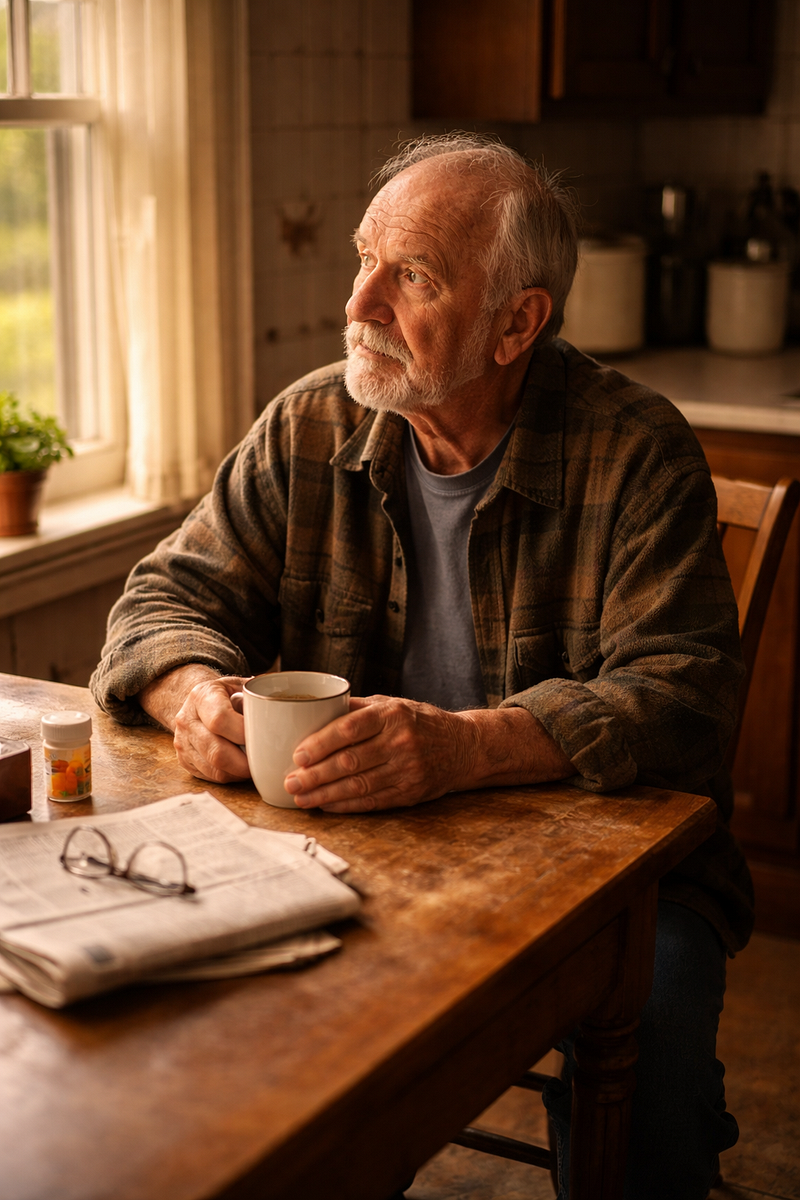
The Weight of Returning Love
Caring for someone who once scared you is a strange kind of healing.
Not sweetness.
Not revenge.
Not duty.
Something deeper.
It’s the quiet realization that people are not only what they were at their worst. Or their best. But everything in between.
And caring for him now — helping him walk, helping him eat, helping him remember — doesn’t erase the hard parts of childhood. But it transforms them. It lets me see him the way he never learned to see himself: a flawed man who tried, failed, tried again, and loved his daughter imperfectly but truly.
He never left me behind — not when it counted. Not on the nights when storms rattled the windows. Not when the world tipped sideways. Not when I needed a father more than he was able to be one.
And I won’t leave him behind now.
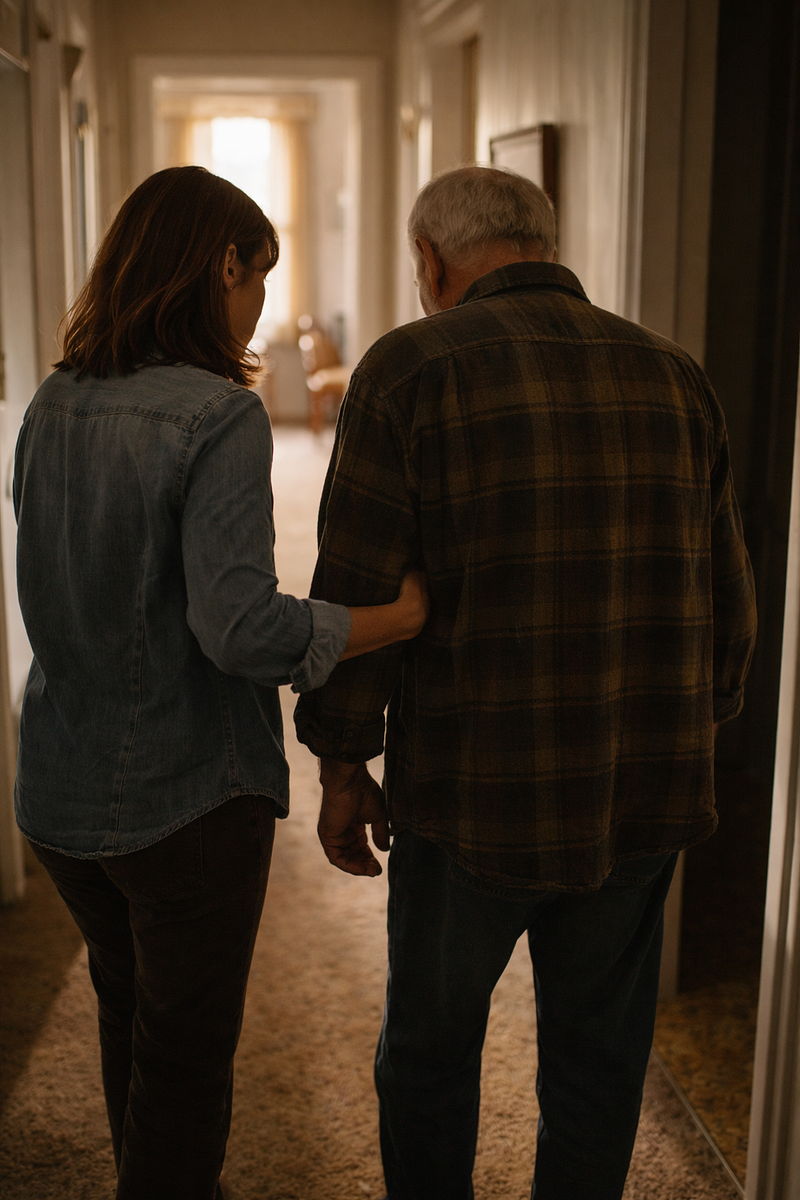
The Child and the Man
If the woods taught me anything, it was this: some children should never be left behind.
And now, standing beside a man who sometimes forgets his own name, I understand the other half of the lesson: some fathers shouldn’t be left behind either — even the imperfect ones, even the complicated ones, even the ones who carried two shadows their whole lives.
Because love is not about pretending someone was perfect. It’s about staying when the world starts dimming behind their eyes, the way he stayed in that forest all those years ago and brought me home.
Home wasn’t always safe. But leaving him behind would mean becoming the very thing the woods once threatened to make of me.
So I stayed.
Melanie Brown writes Bluedobie Dialogues, a publication exploring resilience, systems thinking, and the quiet architecture of survival. She is the founder of Bluedobie Developing and writes from rural Kentucky about technology, memory, and the complicated ways people learn to heal.
This is part of an ongoing memoir series. The next chapter will be published next week.
Names have been changed to protect the privacy of those included in this story.