Peace Is a Competitive Advantage.
Why selective attention is the builder’s edge in chaotic times.

Why selective attention is the builder’s edge in chaotic times.
Chaos is loud because it monetizes attention. That is not a metaphor. It is a business model. Modern media is engineered to keep your nervous system slightly elevated. Not panicked. Activated. There is a meaningful difference — panic makes you leave, activation keeps you scrolling — and the people who designed these systems understood that distinction before you ever opened the app.
The anxiety is the product. Your attention is the inventory. And the people selling it have no stake in what sustained exposure does to your ability to think clearly, build consistently, or make decisions that hold up past Thursday.
Most people know this. Very few have treated it as the strategic problem it actually is.
Why the Brain Cooperates
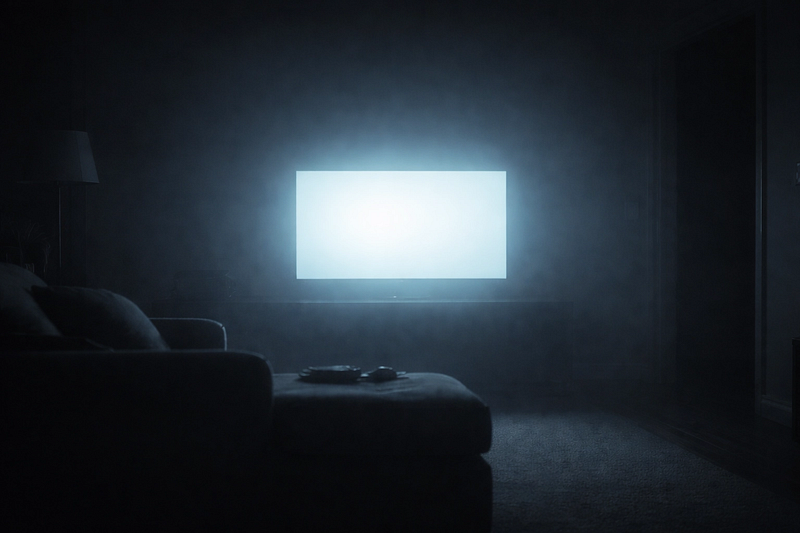
The brain was not built for the volume of threat signals modern media delivers. It was built for a much quieter environment — one where danger was local, immediate, and resolvable. Negativity bias evolved to keep you alive in that environment. A missed threat cost more than a missed opportunity, so the brain learned to weight bad news heavily and good news lightly.
That was useful in 1,000 BCE. In 2025, it means your nervous system cannot distinguish between a predator in the grass and a political headline at 6 a.m. Both trigger the same cortisol response. Both narrow your cognitive field — which is the brain’s way of preparing for immediate action by temporarily shutting down the parts responsible for long-range thinking, creativity, and nuanced judgment.
This is not weakness. It is biology operating exactly as designed in an environment it was not designed for.
The result is predictable: sustained news consumption does not make you better informed. It makes you more reactive. It narrows the window of what feels possible. It trains the brain to scan for threat rather than opportunity — and over time, that scan becomes the default mode. Not just when you are consuming media. When you are trying to think, create, or build.
Why Platforms Amplify the Worst Signals
Engagement algorithms do not optimize for truth, nuance, or your long-term wellbeing. They optimize for time on platform. And the content that holds attention longest is not the content that is most accurate or most useful. It is the content that triggers the strongest emotional response — which means outrage, fear, and moral urgency consistently outperform calm analysis in every feed, on every platform.
This is not a bug. It is the architecture.
The most extreme, most alarming version of any event will consistently reach more people than the measured, contextualized version. Not because the alarming version is more true, but because it generates more engagement. The algorithm rewards the signal that provokes the strongest reaction — and then serves you more of the same, because that is what your behavioral data says you respond to.
You are not seeing the world. You are seeing a curated simulation of the world optimized to keep you emotionally activated and behaviorally predictable.
What This Costs Builders Specifically
For anyone building something — a business, a brand, a body of work — the cost of chronic chaos consumption is not abstract. It is operational.
Every market panic you react to destabilizes systems you built for the long term. Every trend you chase to stay relevant erodes the brand identity that was your actual differentiator. Every hour spent consuming volatility is an hour your brain spends in a narrowed cognitive state — the exact opposite of the expansive, connective thinking that produces good work.
Urgency hijacks long-term thinking. That is not a motivational concept. It is a neurological one. Cortisol, released in response to perceived threat, is designed to produce fast, decisive, short-horizon action. It is extraordinarily useful when the threat is immediate. It is destructive when the threat is a news cycle — because the response it produces is reactive, narrow, and short-term. Precisely the wrong response to a problem that requires patience, perspective, and consistency.
The creator who reacts to every market shift does not become more adaptable. They become less coherent. The business owner who consumes daily chaos does not become better informed. They internalize volatility — and it shows up in their decisions, their content, their brand, and the systems they either build or fail to build.
Selective Attention Is a Strategic Act
Tuning out noise is not avoidance. It is not fragility. It is not willful ignorance dressed up as peace. It is the deliberate protection of the cognitive resources required to do work that compounds.
Selective attention — choosing what you admit into your awareness and what you filter out — is one of the few genuinely high-leverage decisions available to anyone building anything. It does not require money. It does not require access. It requires the willingness to treat your attention as finite, valuable, and worth defending.
That willingness is rarer than it sounds. Because the cultural narrative around staying informed has become moralized to the point where disengagement feels irresponsible. Stepping back from the news cycle feels like not caring. Limiting social media feels like privilege or naivety. The chaos has been so thoroughly normalized that opting out of it requires a kind of countercultural confidence that most people have not been given permission to claim.
Consider this the permission.

One Practical Lever
Doctrine without behavior is just philosophy. So here is one move, applied consistently, that changes the operating conditions.
The 24-hour reaction rule: when a headline, a market shift, a trending conversation, or an industry alarm triggers an impulse to respond — wait twenty-four hours before acting on it. Not because the information is wrong. Because your nervous system needs time to move out of the cortisol narrowing before you can assess whether it actually requires your response.
Most of the time, it doesn’t. Most urgency is borrowed — generated by someone else’s agenda, amplified by an algorithm, and delivered to your nervous system as if it were your emergency. Twenty-four hours of distance reveals which signals were real and which were noise dressed as crisis.
The filter is simple: Does this require my response? Not — is this important? Not — is this true? But — does this specifically require action from me, now, in a way that serves what I am building?
If the answer is no, you have just protected your most valuable resource. Do it enough times and it becomes a system. Systems are what compound.
Peace Compounds
The stability doctrine this series has been building is not about comfort. It is not about withdrawal. It is not about pretending the world is not difficult or that the news is not real.
It is about understanding that a mind in chronic reaction cannot build what a mind in sustained focus can. That the business owner who protects their cognitive margin will, over time, make better decisions than the one who does not. That the creator who maintains brand coherence through volatile seasons will compound an identity that trend-chasers never will.
Chaos is loud because it monetizes attention. Peace is quiet because it compounds value.
The competitive advantage is not in knowing everything that is happening. It is in knowing which of it requires your response.
Not every fire is yours to fight. Not every alarm deserves your cortisol. Not every trending conversation requires your voice.
The work that lasts is built in the quiet.
Build there.
Melanie Brown
Bluedobie Dialogues — on the systems behind meaningful digital work.